Case study · Healthcare · 2026
MedKlaus
An Egyptian-Arabic AI receptionist for the calls clinics miss
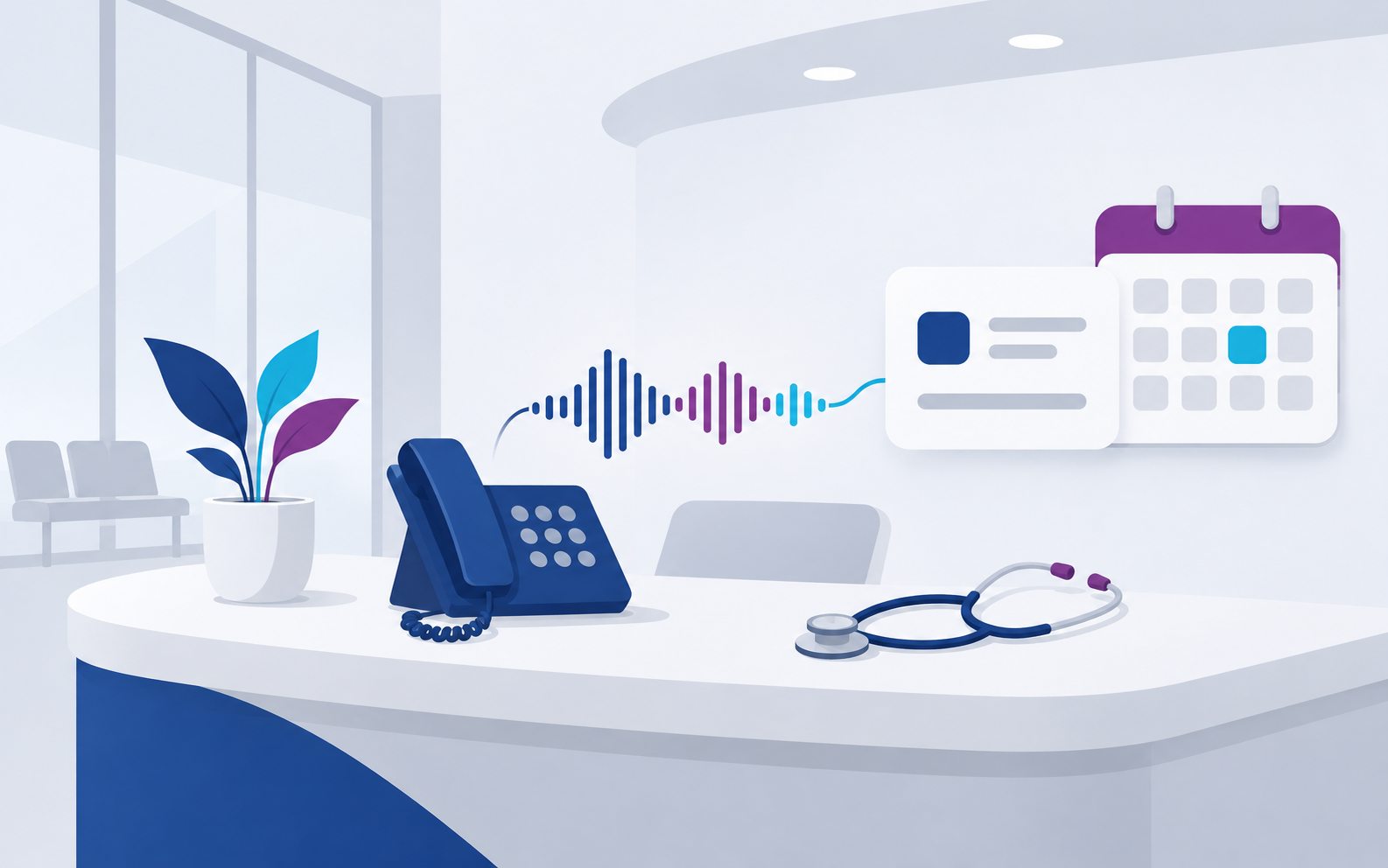
MedKlaus is Vega Data's voice-AI product for private clinics in Egypt. It answers missed calls in Egyptian Arabic, books appointments and hands over to staff, with latency and cost measured on every call.
StatusPrototype. The pilot is gated on telephony, legal and data-protection approvals.
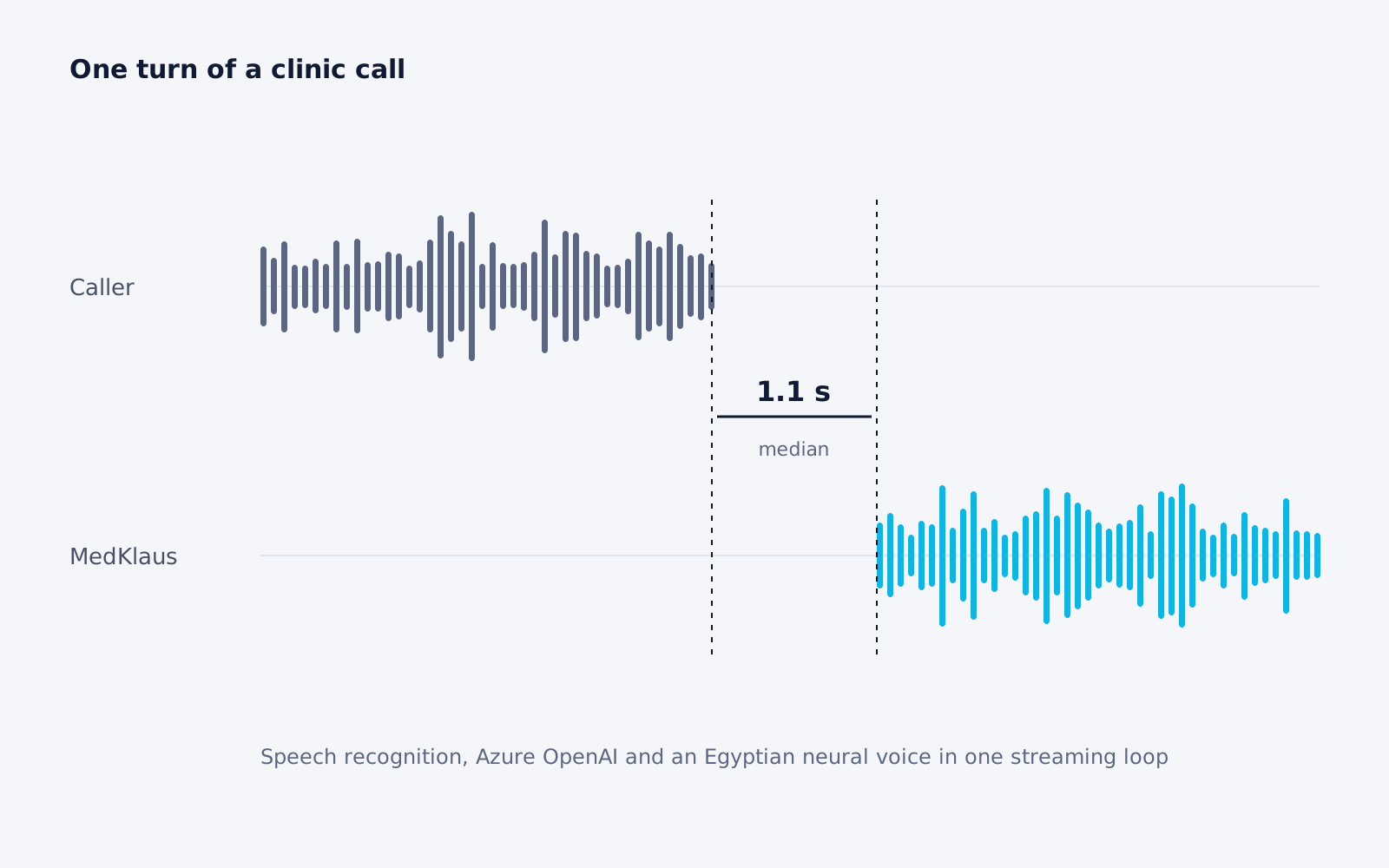
- median from the caller falling silent to the first word of the reply
- 1.1 s
- median from the caller falling silent to the first word of the reply
- lower AI cost per call-minute after tuning
- 65%
- lower AI cost per call-minute after tuning
- voice engines compared on a 41-sentence Egyptian-Arabic test set
- 7
- voice engines compared on a 41-sentence Egyptian-Arabic test set
- voice architectures costed at 100,000 minutes a month
- 11
- voice architectures costed at 100,000 minutes a month
The problem
Most private clinics in Egypt have one receptionist who also handles walk-ins, payments and files. At peak hours the phone rings out, and a patient who cannot get through calls the next doctor on the list. The clinic never learns about the booking it lost.
What MedKlaus does
The clinic keeps its number and its receptionist. Calls that go unanswered for about 15 seconds forward to MedKlaus, which answers in Egyptian Arabic.
- Books, reschedules and cancels appointments.
- Answers questions about fees, location and opening hours.
- Hands the call to staff when it is unsure, and tells callers with urgent symptoms to seek care immediately.
- Writes a structured summary of every call for the clinic: complaint, specialty, doctor, requested slot and outcome.
Engineering for Egyptian Arabic
The voice loop chains Azure AI Speech for recognition and an Egyptian neural voice, and Azure OpenAI for the conversation. We chose the stack by benchmark: seven voice engines on a 41-sentence Egyptian test set, and eleven architectures costed at clinic scale.
- Natural turn-taking. Callers can interrupt mid-sentence, and the reply starts about a second after they stop speaking.
- Local detail. The system reads phone numbers the way Egyptians say them, uses an Arabic pronunciation dictionary and adjusts its grammar to the caller's gender.
- Safe hand-over. Anything outside booking and clinic information goes to a person.
Cost and latency are product metrics
Every call carries a cost ledger priced at the rates in force that day, and an audit dashboard shows latency, tokens and cost for each turn of the conversation. Over ten turns of a test call, the median time from the caller falling silent to the first audio of the reply was 1.09 seconds.
| Version | EGP per minute |
|---|---|
| First working pipeline | 4.23 |
| After model selection and caching | 1.49 |
Where it stands
MedKlaus is a working prototype: the full voice loop runs, with cost tracking on every call. Before the first patient call it needs a licensed telephone route, a legal opinion and data-protection licences for health data. We state these gates openly because clinics and regulators should know them.
Platform and infrastructure
- Azure AI Speech
- Recognises Egyptian-Arabic speech in real time and answers with a natural Egyptian neural voice.
- Azure OpenAI
- Runs the conversation: understanding the request, booking logic and the call summary.
- Azure Virtual Machines
- Host the voice pipeline and its test environments (Italy North).